
Abatement Technologies Air Duct Cleaning in Tacony: A Homeowner’s Guide
Most homeowners judge duct cleaning by how loud the equipment sounds. Abatement Technologies-grade systems are designed around a different metric entirely: sustained negative pressure measured in cubic feet per minute, which determines whether contamination gets captured or just agitated. A machine that roars can still stir settled debris into your living room air if it isn’t built and sealed to hold pressure. So when you evaluate bids in Tacony, ask what the equipment is designed to do, not how impressive it sounds.
If you’d rather have a pro handle the job than reverse-engineer the specs yourself, call Air Duct Cleaning Tacony at (855) 337-1285 for a free estimate.
Key Takeaways
- Abatement Technologies equipment is remediation-grade, HEPA-filtered negative air machinery built to contain contaminants, not recirculate them.
- True cleaning relies on sealed airflow and sustained negative pressure, not raw suction power.
- Remediation-grade gear matters most after water damage, smoke residue, or heavy biological contamination.
- Ask any duct cleaning company for collection unit specs, filter rating, and how they verify pressure during the job.
- Cleaning, repair, sealing, and sanitizing work as one system – not separate add-on sales.
What Does Abatement Technologies Equipment Actually Do?
Abatement Technologies builds HEPA-filtered negative air machines for professional remediation. These units are designed to pull contaminated air through high-efficiency filters and hold it in a contained system instead of blowing fine particulate back into a room. That’s the opposite of a retrofitted shop vac, which is the common shortcut among low-bid competitors.
Here’s the practical difference. A shop vac class machine stirs dust and pulls some of it in, but the finer particles escape back into the air. In a Tacony rowhouse with tight rooms and low airflow, that escaped dust settles right back onto the surfaces you just cleaned. A HEPA-rated collection unit captures those particles at a level that keeps them out of the air you’re breathing.
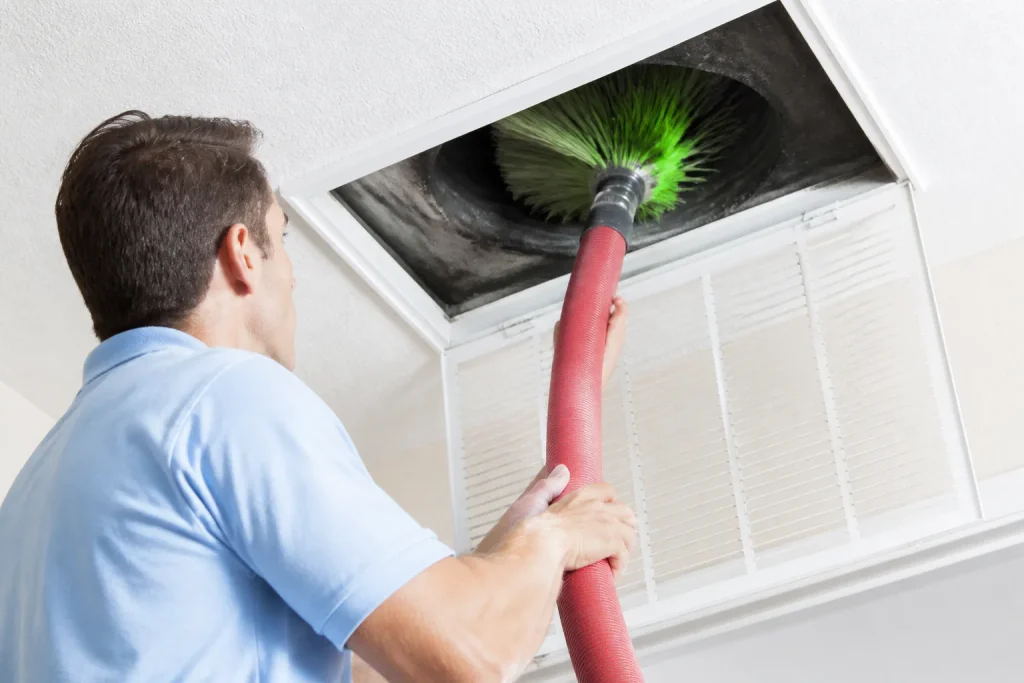
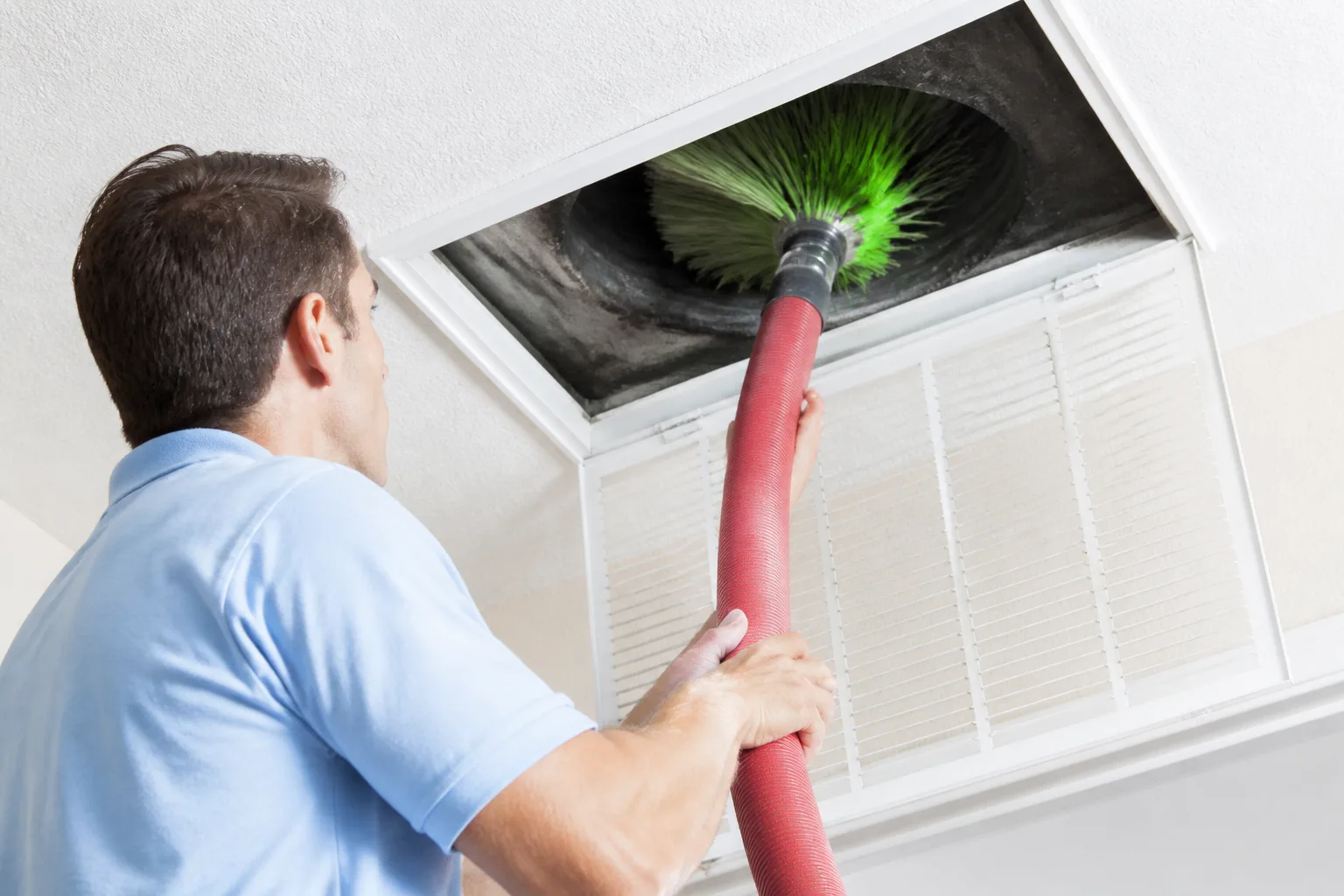
In our work, we run these systems alongside a Rotobrush rotary brush and Nikro HEPA-rated vacuum. Each tool handles a different part of the job: the rotary brush dislodges compacted debris from duct walls, the Nikro vacuum contains it during service, and the Abatement unit manages filtration and pressure through the system. The right result depends on the class of equipment doing the capture, not just the sound of a motor running.
How Does Negative Pressure Cleaning Work, Mechanically?
Negative pressure cleaning seals the duct system, creates directional airflow toward a single collection point, and holds that flow long enough to move debris out. When the system is sealed and a collection unit pulls air at a sustained rate, every leak and every duct branch becomes part of the path. Contaminants travel toward the collection unit rather than drifting into rooms between zones.
The sequence typically looks like this:
- Inspection. We map the duct layout and identify leaks, disconnected runs, and problem zones before any cleaning starts.
- Sealing the system. Registers are covered or sealed so air is pulled through ducts, not through the room.
- Negative pressure set. The collection unit draws air and holds a steady pressure differential, which we verify during the job.
- Source removal. Rotary brush and vacuum tools work through each run, dislodging material into the airflow path.
- HEPA collection. Contaminants are trapped at the collection unit rather than recirculated.
Why does this matter between zones in a Tacony home? Many homes here have shared or adjacent return paths. Without pressure control, cleaning one zone can push dust into a neighboring room. Negative pressure cleaning eliminates that cross-contamination. It’s a containment standard, and it’s the same principle used in mold and restoration work.
When Does Remediation-Grade Equipment Really Matter?
Standard maintenance cleaning benefits from good equipment. But in some situations, professional remediation-grade capture is essential, and agitation without proper containment can make the problem worse. Those situations include:
- Post-water-damage mold. Once spores have colonized a duct run, disturbing them without HEPA capture at the collection point spreads them through the house.
- Fire smoke residue. Smoke particles cling to duct walls as oily deposits. A brush loosens them; only a sealed system with proper filtration keeps that residue out of living areas.
- Heavy biological contamination. Areas with consistent moisture or a wildlife intrusion can carry elevated microbial loads. Mechanical cleaning has to come first, followed by sanitizing to address what’s left.
In our experience, the homeowners who call after a water event or a small fire are the ones who most need to ask about capture capacity. A shop vac setup running in a Tacony rowhouse during those conditions can redistribute spores and smoke particles throughout the home. That’s a containment failure, not a cleaning job. It’s also why we treat sanitizing as a step after mechanical cleaning is complete, not a substitute for it – our Guardsman-brand treatment comes after the ducts are physically clean.
What Should You Ask Any Duct Cleaning Company?
Ask for three things: the collection unit’s manufacturer and model, the HEPA filter rating on that unit, and how the technician verifies pressure differential during the job. If a company can’t answer those questions, their “professional equipment” claim is a marketing line, not a process.
Here’s a practical checklist for evaluating bids in Tacony:
- Ask what the collection unit is. A named model from a company like Abatement Technologies, Nikro, or Rotobrush is verifiable. “Industrial vacuum” is not.
- Ask for the filter rating. HEPA-rated is the phrase you’re looking for. Anything vague means the unit probably lacks it.
- Ask how pressure is verified. A real process includes a pressure gauge reading, not just a technician’s assurance.
- Ask about the cleaning scope. Whole-system cleaning follows inspection, cleaning, repair and sealing, and sanitizing – not a quick pass over the registers.
- Ask for before-and-after photos of your own ducts. Any company confident in its process should be able to show you evidence of what was removed.
One flat price per system, agreed before work starts, is the other test of a legitimate quote. A company that quotes per vent or leans on a low teaser price usually intends to resolve the difference once the technician is inside your home. Ask for the full number before anyone arrives.
How Does a Full-Service Visit Fit Together?
Equipment class is only one piece. The whole visit should run as a system: inspection first, source removal, HEPA collection, sanitizing, and finally duct repair and sealing. Order matters. If you clean and skip the sealing step, the same leaks that let debris escape will pull unfiltered air back into your ducts. If you sanitize before mechanical cleaning is complete, you’re treating a surface you haven’t cleaned yet.
Air Duct Cleaning Tacony covers five core services in a single visit: air duct cleaning, dryer vent cleaning, HVAC cleaning, duct repair and sealing, and air quality sanitizing. That means a full-system visit doesn’t require juggling multiple vendors or booking a second appointment for the furnace and coil cleaning. Dryer vent cleaning counts too, and here’s a detail most duct companies skip: your dryer vent is a fire risk, and we treat it like one. Lint buildup in a vent reduces airflow and can ignite. It’s a safety service, not an upsell.
We also install and recommend Honeywell and Aprilaire air quality products when a home would benefit from better filtration long-term. That’s a bridge between a one-time cleaning and ongoing air quality maintenance, not a required part of the job. Think of it this way: clean ducts are the starting line, not the finish.
When to Call a Pro
If your ducts show visible debris at the registers, if your system hasn’t been cleaned in recent memory, if you’ve had water intrusion near ductwork, or if a duct run is detached or crushed, that’s the point to call. Duct repair and sealing involve more than reach and a flashlight, and in a Tacony home the ducts are often tucked in tight spaces behind finished walls. Call Air Duct Cleaning Tacony at (855) 337-1285 for a free estimate.
Related services in Tacony: For a closer look at each piece of a full-system visit, see our pages on air duct cleaning, dryer vent cleaning, and HVAC cleaning.
The Bottom Line
Abatement Technologies equipment is designed around containment. Its purpose is to hold negative pressure and capture contaminants at a HEPA filter, so what comes out of your ducts doesn’t go back into your home. Understanding that standard changes what you look for in a quote. Instead of comparing pennies, you’re asking what a company’s equipment can actually do. A clean duct system starts with the right tools and a process built around them.
If you’re in Tacony and suspect your ductwork is contributing to dust, allergy symptoms, or reduced HVAC efficiency, Air Duct Cleaning Tacony offers free estimates. Our technicians have up to 11 years of experience with professional-grade equipment, and the local pro we connect you with is licensed and insured as the state requires. Call (855) 337-1285. We answer 24/7. Fast dispatch from 7am to 7pm, Sunday through Friday.
Frequently Asked Questions
Yes. Abatement Technologies units are HEPA-rated negative air machines built for remediation work – mold, water damage, and restoration jobs – where containment is the whole point. A shop vac pulls dust but recirculates fine particles back into the room. The difference shows up in what remains airborne after the job. Call (855) 337-1285 for an exact quote on your Tacony home – estimates are free.
Yes, and it’s often more important there. Older duct layouts have more seams, more leaks, and more shared airflow between zones. Sealing the system first is the fix – it lets a collection unit pull air through the ducts instead of the room. A company that skips the sealing step is working against the house. Call (855) 337-1285, and we’ll assess your layout before quoting.
Ask for before-and-after photos of your own ducts. A company using professional equipment should be able to document the process: what was found, what was removed, and what the ducts look like afterward. It’s the same standard we hold ourselves to. Call (855) 337-1285 if you want to compare estimates from a defensible process.
There’s no fixed clock. Visible debris at the registers, recent water intrusion, a renovation, or persistent allergy symptoms point to a cleaning sooner rather than later. A well-maintained system with no moisture issues usually goes longer. For a Tacony home, we’d inspect before quoting – call (855) 337-1285, and we can talk through what you’re seeing.
Air Duct Cleaning Tacony serves homeowners and residential property managers who want a verifiable, equipment-backed process instead of the cheapest bid. One flat price per system, agreed before work starts, with before-and-after photos so you know what changed.
Written by the team at Air Duct Cleaning Tacony.
Need Air Duct Cleaning Help?
Call Air Duct Cleaning Tacony - the local pro we connect you with is licensed and insured, here with fast help in Tacony.
(855) 337-1285