
Last updated November 25, 2026
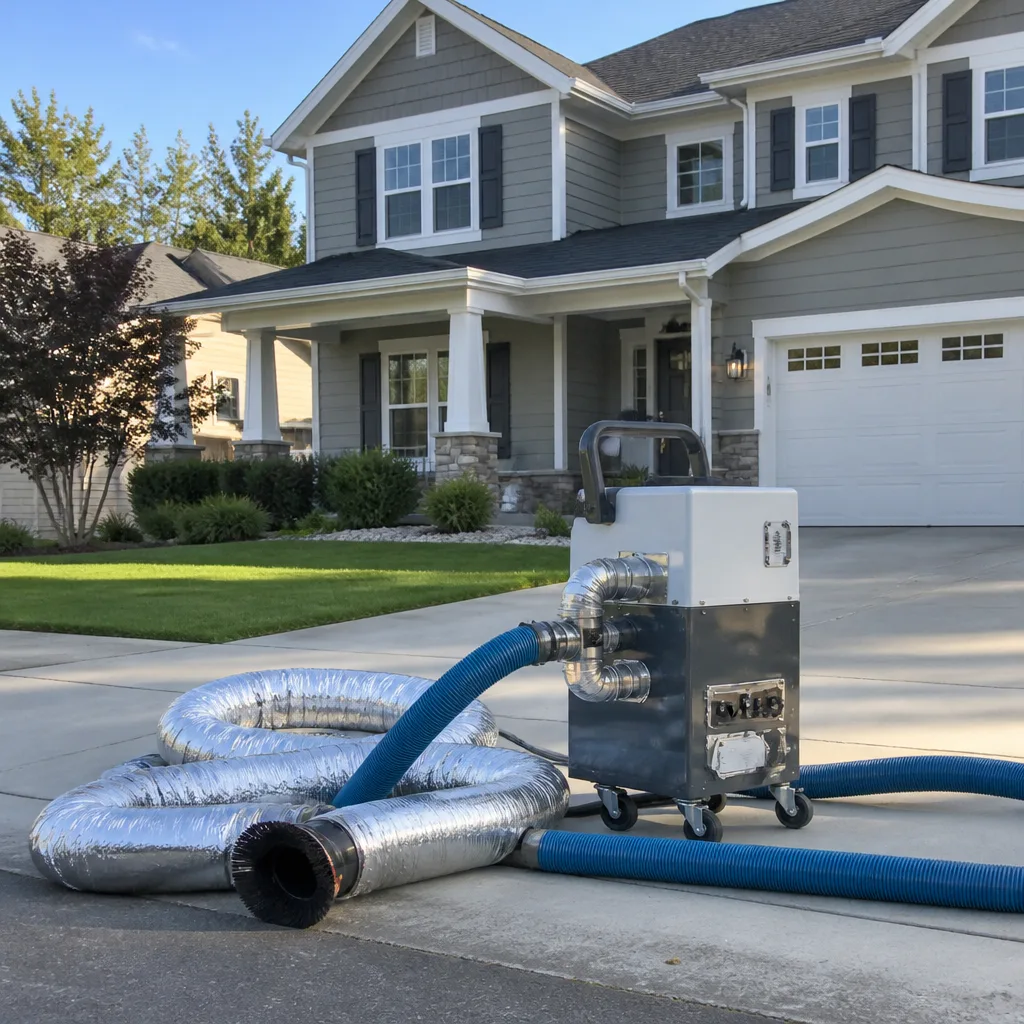 Whole-home duct cleaning
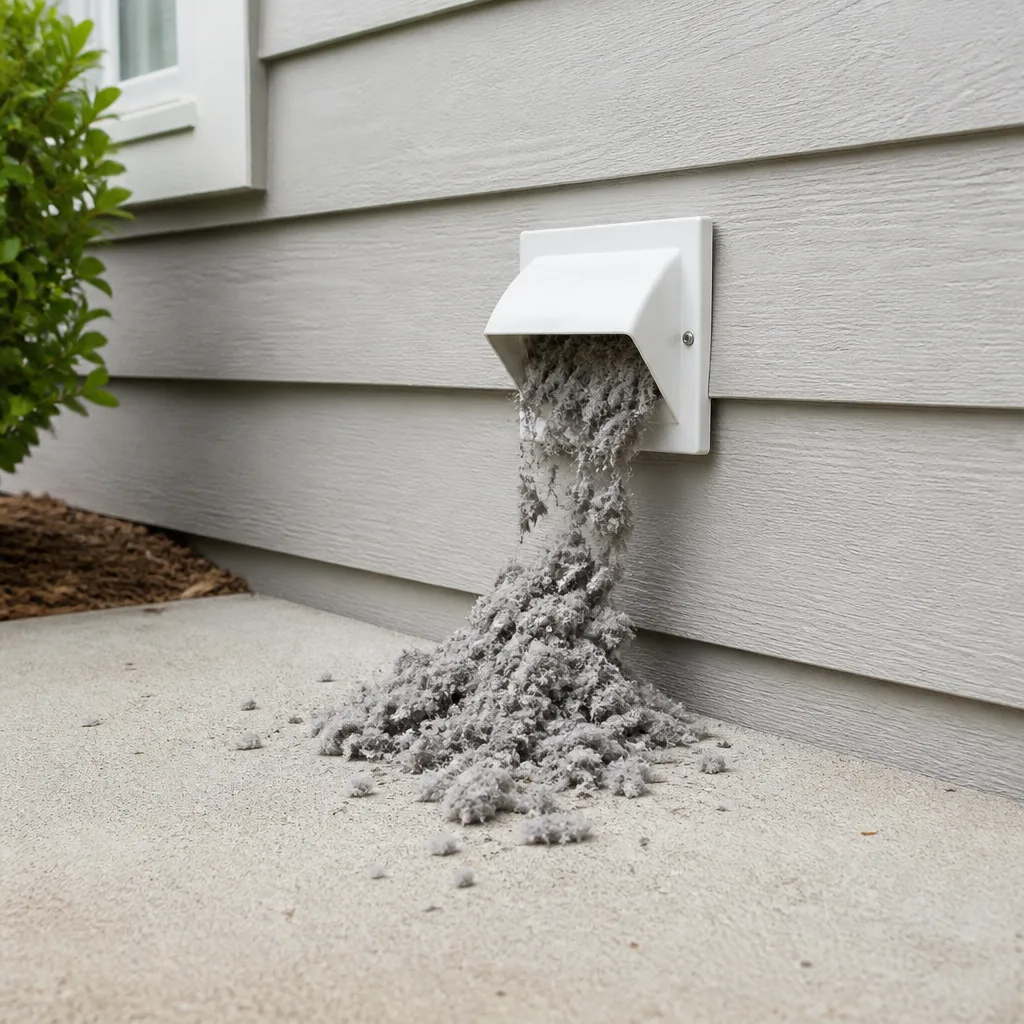 Dryer vent cleaning
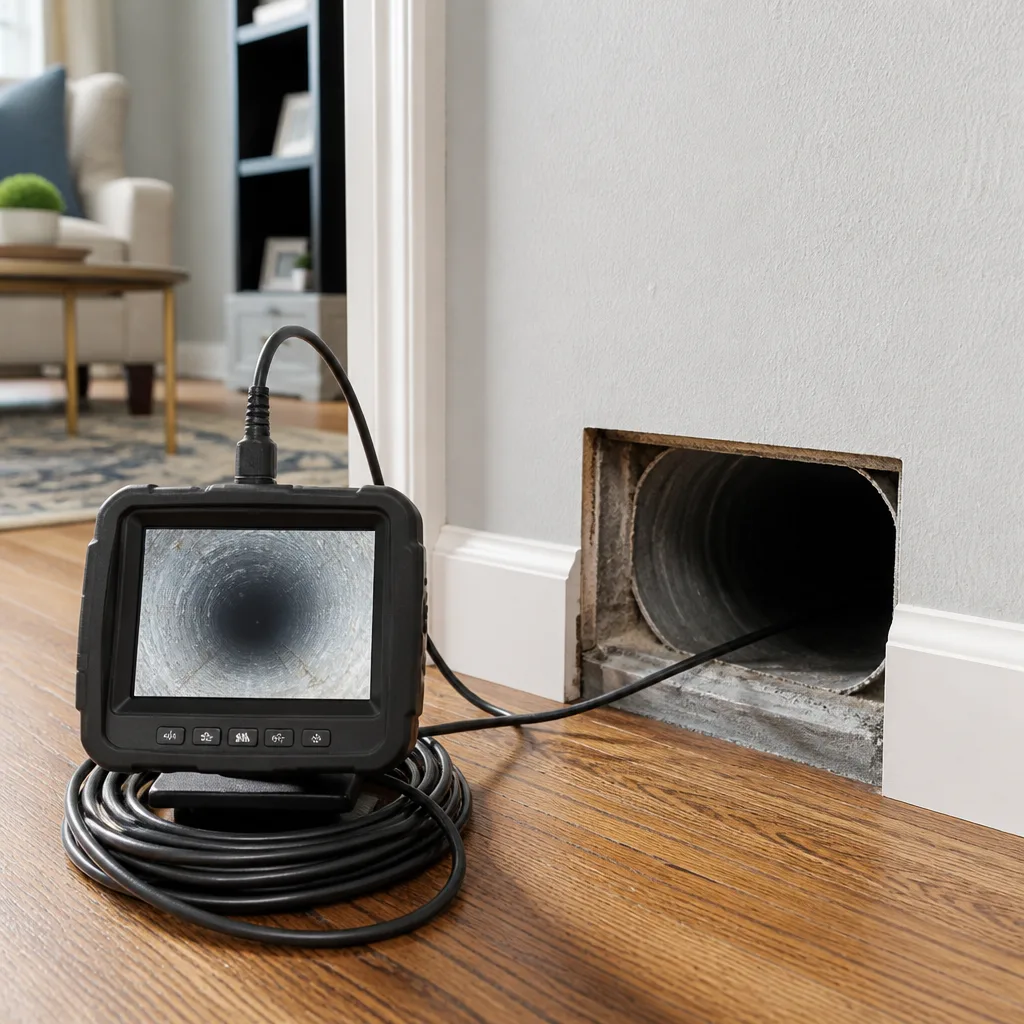 Camera inspection
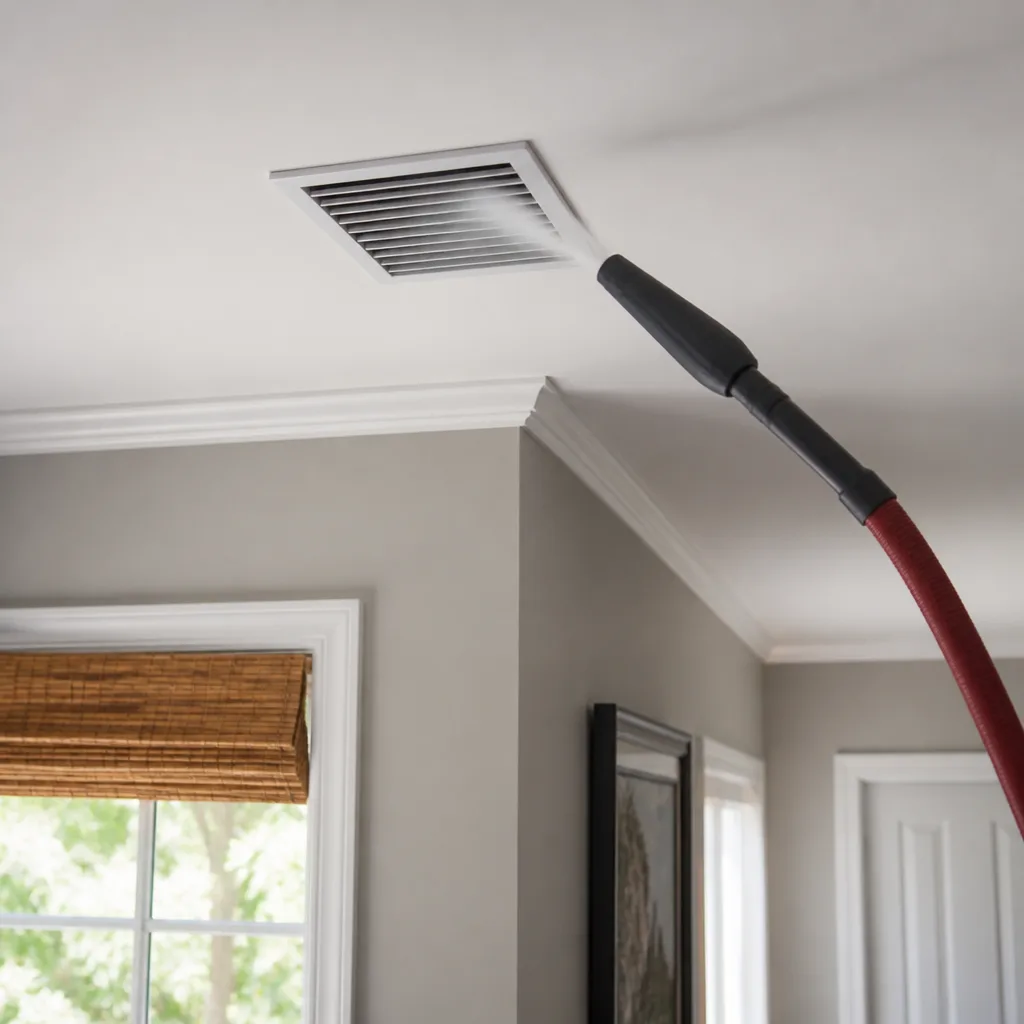 Sanitizing & deodorizing
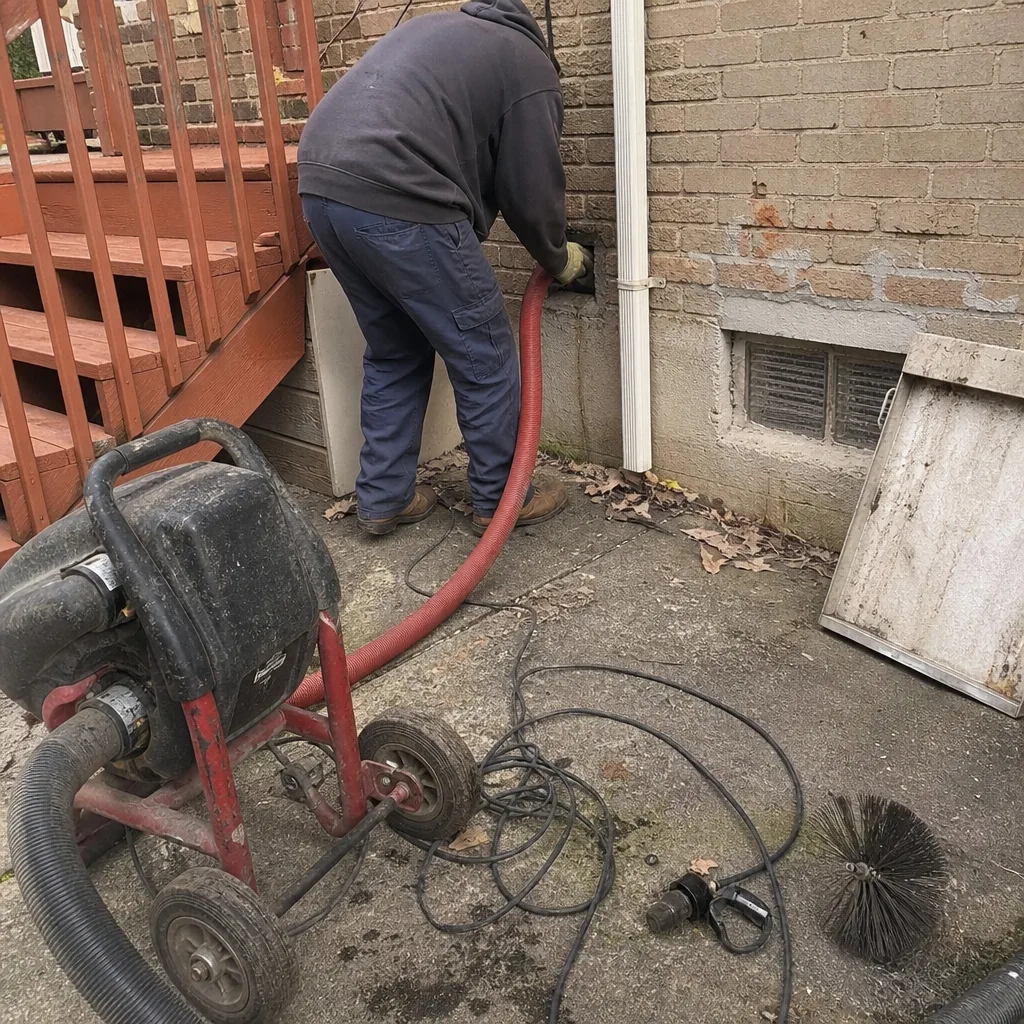
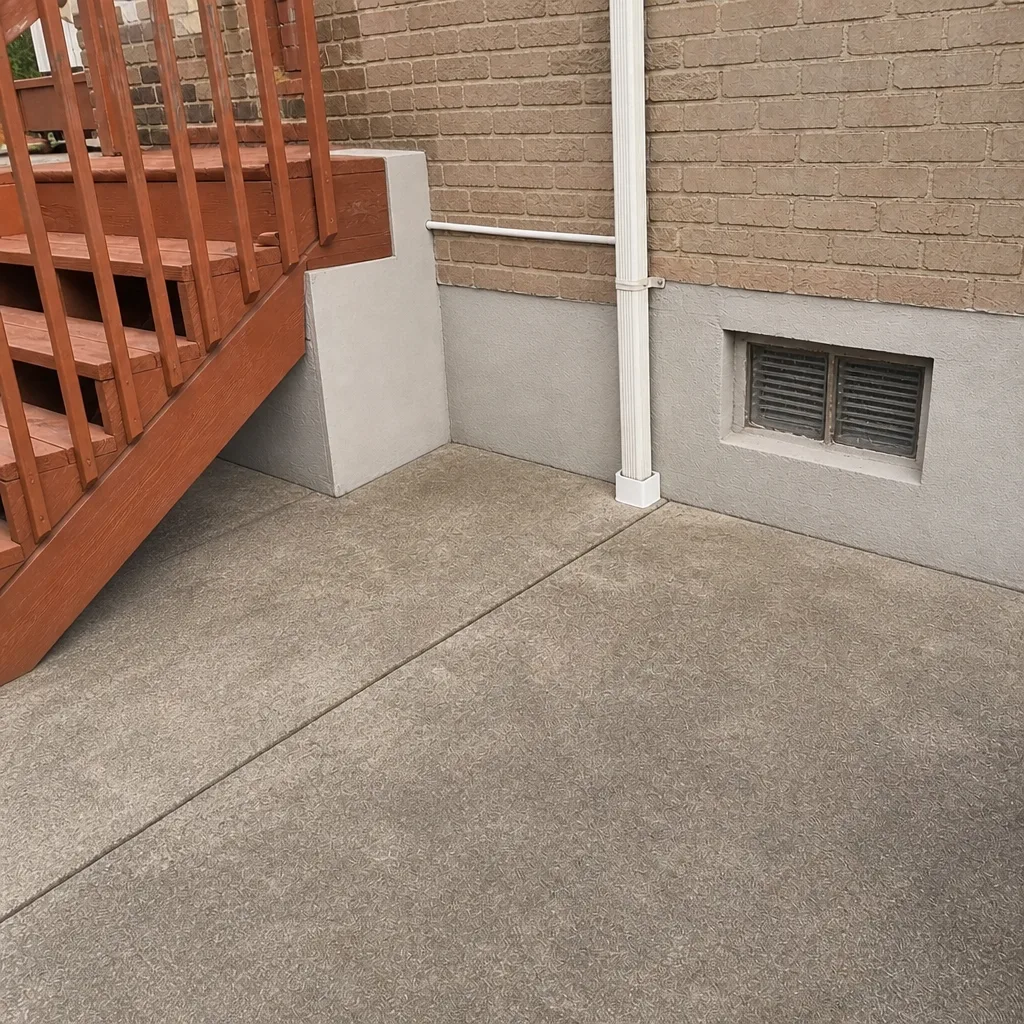
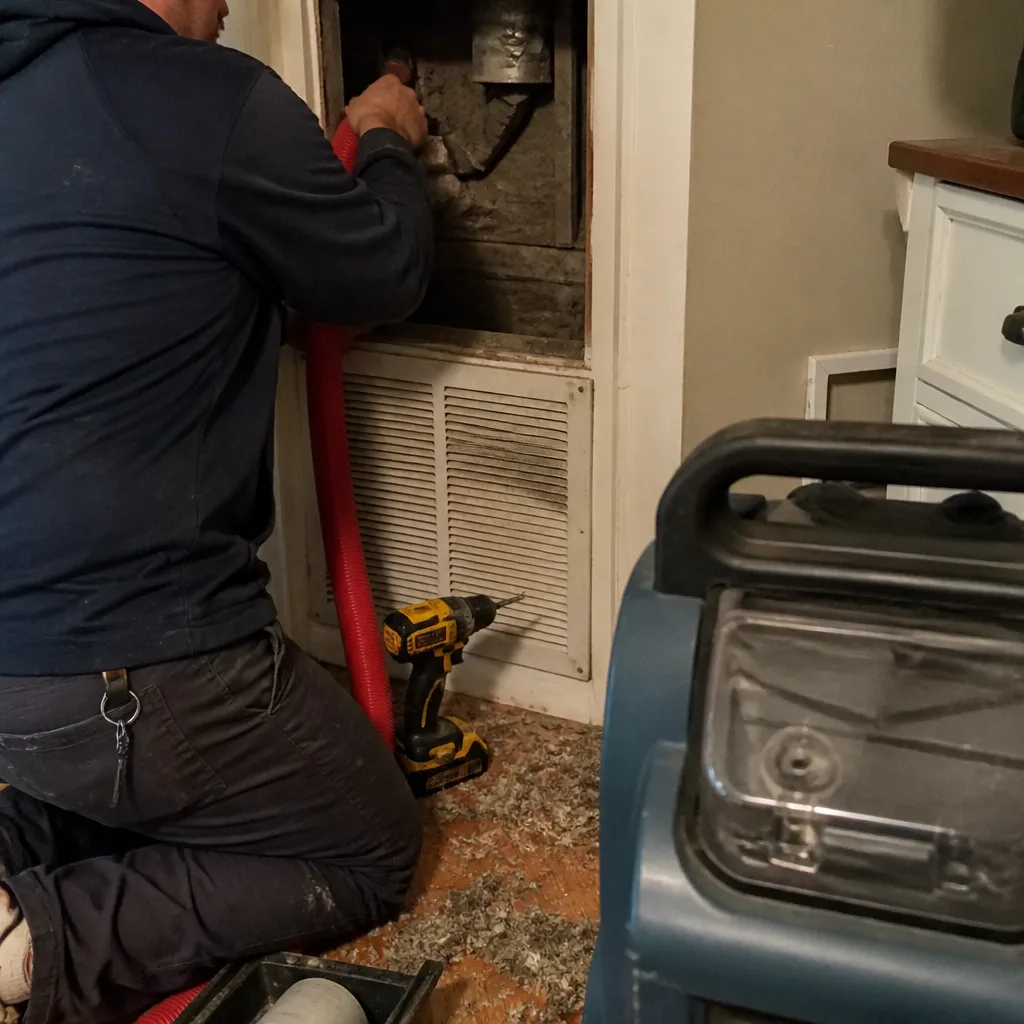
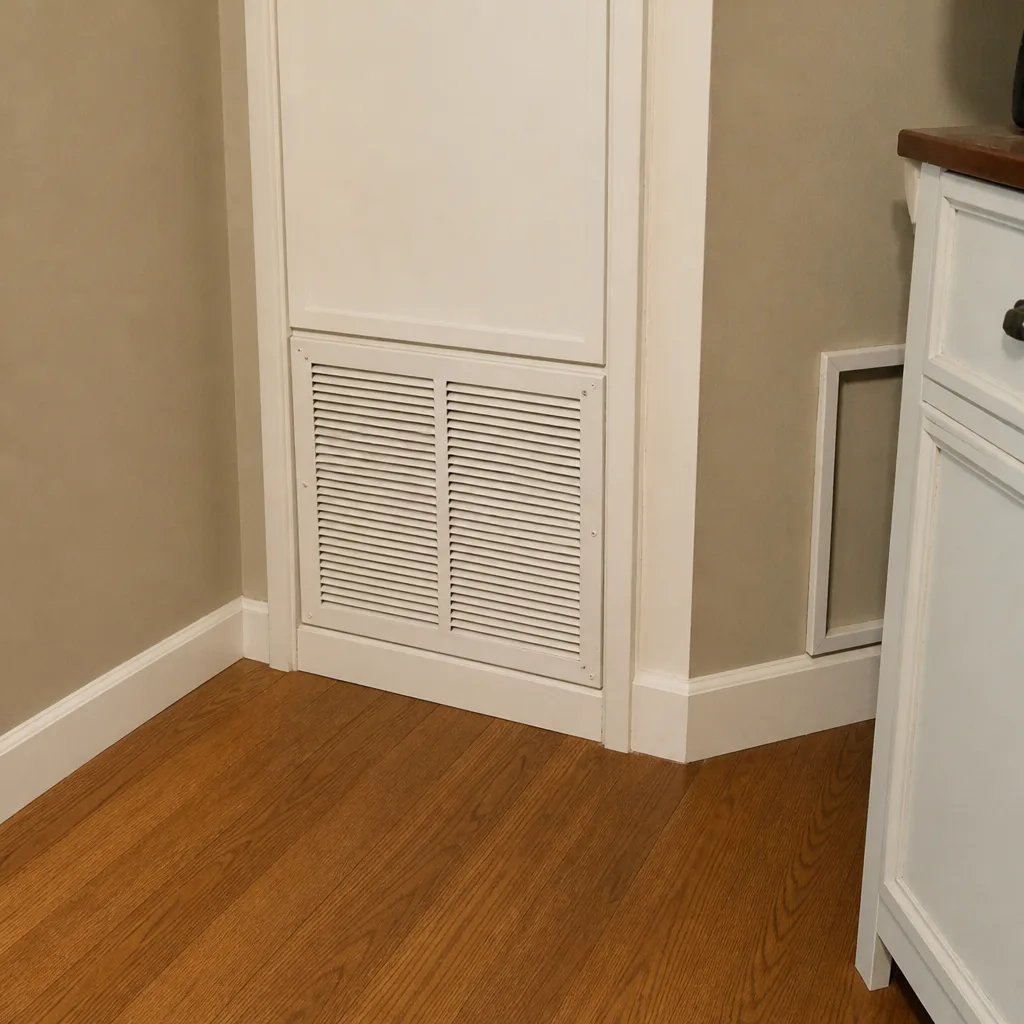
Whole-system duct and dryer vent check with before-and-after photos - you see exactly what came out of your vents
That "$99 whole-house special" is a bait ad - the real number appears once they are in your hallway, or the "clean" is a shop-vac at the register. We photograph the inside of your ducts before and after instead.
Seasonal Air Duct Cleaning Care for Tacony: Year-Round Homeowner’s Guide
Running your heat for the first time in October after a humid Philadelphia summer is essentially sending months of accumulated dust and spores through every room in your house at once. That first warm-air smell people notice – the one they describe as “dusty” or “musty” – is the system telling you what settled in the ducts while the air conditioning ran and the windows stayed shut. Most homeowners treat duct cleaning as a fixed calendar item, something to schedule once a year or once every few years. In Tacony, the better approach is to match the work to what each season actually does to your ductwork. This guide walks through all four seasons, what each one means for the air you breathe, and the maintenance steps worth doing before anything reaches a service call.
Quick Answer
The best time to clean air ducts in Tacony is early fall, right before you switch from cooling to heating, because it clears the summer’s accumulated moisture and debris before the furnace pushes it into every room. Spring pollen loading, winter heating cycles, and summer humidity each create different problems in ductwork, so timing a full cleaning to the season’s specific risk gets better results than cleaning on a fixed schedule. A short inspection in late summer and a few simple habits in between will carry a Tacony home through the year.
Styles & brands we work with
- Whole-home duct cleaning
- Dryer vent cleaning
- Camera inspection
- Sanitizing & deodorizing
Table of Contents
- Why Tacony’s Four Seasons Create Four Different Duct Problems
- What Summer Humidity Does to Ductwork in Tacony
- The Pre-Heating Season Inspection: Catching Moisture Damage Before Winter
- Spring Pollen and How It Loads Return Ducts Faster Than You Expect
- Why Fall Is the Highest-Value Cleaning Window in Tacony
- Winter Heating Cycles: When Settled Dust Gets Baked Into Your Air
- The Full-Year Maintenance Checklist for Tacony Homeowners
- Signs Your Ductwork Needs Attention Now, Not Next Season
Why Tacony’s Four Seasons Create Four Different Duct Problems
Tacony sits in a climate with genuine seasonal swings: humid summers, cold winters, and a wet spring full of tree and grass pollen. That variety is exactly why ductwork in this neighborhood behaves differently from ductwork in a milder region. Each season presses a different kind of contamination into the system, and a cleaning done in June addresses a different problem than one done in October.
Here’s how the year breaks down for a typical Tacony home:
- Summer: air conditioning runs constantly with the windows closed. Condensation forms on cold coil surfaces, indoor humidity climbs, and any dust sitting in the ducts becomes a food source for mold and mildew spores.
- Early fall: the system flips from cooling to heating. Debris that accumulated over the humid months gets pulled across a heat exchanger and blown into living spaces as that first warm-air smell.
- Winter: dry heated air circulates through the same ductwork for months. Dry air holds dust differently than humid air, and settled particles get stirred up every time the furnace cycles on.
- Spring: pollen season in the Philadelphia area starts early and runs long. Open windows and door traffic pull pollen-laden air into the return side of the system, where it sticks to duct walls.
Tacony’s older housing stock, with its mix of rowhouses and detached homes near the river, adds another layer. Homes built decades ago often have original sheet metal ductwork, sometimes with joints that have loosened over the years. That looseness means more places for dust and moisture to collect, and more gaps for air to leak out before it reaches the rooms you’re paying to heat. A seasonal routine that accounts for the house as well as the calendar is what keeps this manageable.
What Summer Humidity Does to Ductwork in Tacony
Summer is when ductwork turns from a passive pipe into an active environment for microbial growth. Air conditioning removes heat, but it also creates a cold surface – the evaporator coil and the plenum around it – where moisture from humid indoor air condenses. That damp zone is where the trouble starts. Dust particles that would normally stay dry and loose can bind to a wet coil surface and become a sticky film, and that film feeds mold and mildew spores that were already in the air.
By August, a Tacony home that runs its AC around the clock has usually pushed a measurable layer of this material onto the coil and the first few feet of supply duct. You may not smell it yet. But it becomes a winter problem the moment the heat comes back on.
Minimum maintenance steps during summer that don’t require a service call:
- Change the air filter on schedule. Humid months stress filters faster than cool months because more particulate sticks to a damp filter media. A filter that looked fine in April can be loaded by July.
- Keep indoor humidity in check. A standalone dehumidifier or running the AC fan a bit longer each cycle keeps the coil surface drier and slows the wet-dust film from forming.
- Watch for musty odors after the AC cycles off. A faint musty smell rising from a floor vent a minute after the compressor shuts down is a sign moisture is sitting somewhere in the system.
- Check that condensation is draining. A clogged condensate line keeps the coil area wet even when the system is cooling fine. Look for standing water near the indoor unit after a long cooling cycle.
- Leave the registers open. Closing vents in unused rooms raises static pressure and pushes more air through fewer ducts, which stirs up more dust in the summer than you need.
If those checks point to a moldy coil or a persistent musty smell, a professional assessment is worth doing before the heating season. The summer moisture cycle is the single most important reason ductwork in Tacony gets cleaned in the fall rather than the spring.
The Pre-Heating Season Inspection: Catching Moisture Damage Before Winter
The most valuable 20 minutes a Tacony homeowner can spend on ductwork happens in late September, before the furnace runs. A pre-heating inspection looks for the specific damage a humid summer leaves behind, and it catches it while the system is still off and easy to examine. Do this before the first cold snap, not after.
A useful pre-heating inspection covers these points:
- Look at the supply registers for staining. Rust, water marks, or a dark ring around a register opening points to moisture that either condensed in the duct or leaked from a joint above.
- Smell each room’s register with the system on fan-only. Fan-only mode moves air without heating it, so you get the duct’s own smell without the heat exchanger’s influence. Musty or earthy air here is the signal.
- Check the filter slot for gaps. A filter that doesn’t seat snugly lets unfiltered air bypass the media and coat the coil and ducts. If you can see daylight around the filter, the filter isn’t doing its full job.
- Inspect flexible duct runs in the attic or crawlspace. Look for torn outer jackets, crushed sections, or disconnected joints where humid attic air can enter the system.
- Open the access panel on the indoor unit and look at the coil. If you can see a dust mat or a dark film on the coil fins, that’s exactly what will get blown into the house all winter.
If the inspection turns up signs of mold, standing moisture, or a heavily soiled coil, that’s the moment to get a professional on the system – not mid-January when the house is cold and the problem is already in the air. A thorough air duct cleaning that includes the coil and supply plenum before the heating season sets the system up clean for the winter months ahead.
Spring Pollen and How It Loads Return Ducts Faster Than You Expect
Philadelphia’s pollen season starts early, with tree pollen in March and April followed by grass pollen into June. That window matters more for ductwork than most homeowners realize, because pollen doesn’t just float around the rooms – it gets pulled into the return ducts every time the system runs or a door opens. Return ducts are the intake side of the system, and they see the most airborne debris of any part of the ductwork.
What makes spring loading different from summer or winter:
- Pollen is fine and sticky. It clings to duct walls rather than bouncing off, so a few weeks of open-window weather can deposit a visible film in return plenums.
- Spring brings door and window traffic. The system’s return side sees more unfiltered outside air in spring than at any other time of year.
- Pollen particles are small enough to pass through a standard filter. Basic filters catch larger dust but let much of the fine pollen through to the coil and blower.
- Cooling starts while pollen is still in the air. When you first turn on the AC in spring, it pulls pollen season’s worth of debris across a coil that’s now cold and slightly wet – the worst combination.
The minimum maintenance for spring is mostly about protecting the return side. Keep the filter fresh and note how fast it loads. Change it more often through April and May than you would in winter. If you use a higher-MERV filter during pollen season, watch the system’s airflow – a filter that’s too restrictive for the blower motor can cause its own problems. Keep windows closed on high-pollen days if anyone in the house has seasonal allergies, and wipe down supply registers to clear pollen that’s settled on the louvers.
If spring inspections show the return ducts are visibly coated, or if allergy symptoms in the house get worse every April and May, pollen loading is a likely contributor. A spring cleaning targets that specific load before it works its way to the evaporator coil.
Why Fall Is the Highest-Value Cleaning Window in Tacony
Early fall is the highest-value cleaning window for a Tacony home, and the reasoning is seasonal, not arbitrary. By the time the first cool nights arrive, the ductwork has absorbed summer’s moisture, spring’s pollen, and a full cooling season’s worth of dust. Cleaning before the furnace comes on clears all of that out at once, so the winter’s heated air circulates through a fresh system rather than redistributing it. Fall is also when contractors have more flexibility – it’s not the mid-summer rush or the deep winter emergency period.
Why fall beats spring for the full cleaning:
- You’re clearing the backlog before heating. A fall cleaning removes summer contamination before it gets heated and pushed into rooms all winter.
- You avoid heating the debris. The heat exchanger’s warmth brings out odors and microbial activity in dust that would otherwise stay dormant in a cooler duct.
- You can inspect the full system without urgency. A fall inspection has time to find and fix duct leaks, disconnected joints, and loose insulation before those problems cost more in winter.
- It sets up the winter air quality you actually feel. Clean ducts in October mean the first warm-air smell of November is mild or absent.
A full cleaning at this point isn’t just a vacuum pass. In our experience, fall service callouts frequently turn up compromised duct joints that have been quietly leaking for months – the summer humidity finds those gaps and the winter heating season reveals them as cold rooms or drafts. That’s where duct repair and sealing comes in as a natural companion to cleaning. Air Duct Cleaning Tacony treats all five services – cleaning, dryer vent cleaning, HVAC cleaning, duct repair and sealing, and air quality sanitizing – as one connected scope so a fall visit can address what the cleaning reveals.
Equipment matters at this stage. Consumer vacuums and shop-vac style setups cannot dislodge compacted dust from duct walls or capture the fine particulate that a full cleaning stirs up. We use Rotobrush rotary brush systems to dislodge debris from duct walls, Nikro HEPA-rated vacuums to contain it, and Abatement Technologies air filtration units to capture airborne contaminants during the work rather than recirculating them through your home. The equipment is the difference between a duct that looks cleaner and a duct that is cleaner.
Winter Heating Cycles: When Settled Dust Gets Baked Into Your Air
Winter is when settled dust becomes airborne dust at a steady rate. Heating air is dry, and dry air doesn’t hold fine particles the way humid summer air does – dust stays fluid, circulates longer, and settles into a visible layer on the registers and around the house within days of a cleaning. The furnace cycling on every hour lifts more of it into the air supply. For a home that wasn’t cleaned in the fall, that dust comes with the old summer load mixed in.
Winter maintenance without a service call:
- Change the filter more often than you did in summer. A filter loading with winter dust clogs faster, and a clogged filter drops airflow and strains the blower.
- Run the fan on a low, continuous setting if your thermostat offers it. Continuous low airflow keeps the filter catching dust rather than letting it settle in the ducts between heating cycles.
- Keep indoor humidity in a comfortable range. Winter air gets dry, but pushing humidity too high creates condensation in cool duct runs. A hygrometer is worth the small cost.
- Watch for cold rooms and drafts that weren’t there in summer. A duct joint that came loose during the summer’s humidity will show up as a winter draft or an underheated room.
- Vacuum registers from the room side. Cleaning the visible face of each register keeps the dust count down without disturbing the duct interior.
If the winter air in your home feels consistently dry and dusty no matter what the filter is doing, the ducts themselves are probably the source. A winter air quality sanitizing service – applying a Guardsman treatment after mechanical cleaning – addresses microbial activity that cleaning alone leaves behind. It doesn’t replace the mechanical cleaning, but it completes it.
The Full-Year Maintenance Checklist for Tacony Homeowners
Here’s the year mapped out as concrete actions. This is the working version of the seasonal approach – print it or keep it on your phone and check each item as the season arrives.
Spring (March through May)
- Replace the filter when pollen season starts and again in May. Watch for rate of loading.
- Keep windows shut on high-pollen days if allergies are a concern.
- Wipe down supply register louvers to clear pollen.
- Watch the return plenum for visible pollen coating; schedule a spring cleaning if it’s heavy.
Summer (June through August)
- Change the filter on schedule; humid air accelerates loading.
- Check humidity levels and run a dehumidifier if needed.
- Verify the condensate line drains freely.
- Smell for mustiness after the AC cycles off. Note it if it’s there.
- Leave unused registers open.
Pre-Heating Season (September)
- Do the pre-heating inspection: registers, filter slot, flexible runs, and the indoor unit coil.
- Test fan-only mode room by room.
- Schedule the full cleaning before the furnace runs.
- Book duct repair and sealing if the inspection finds loose joints or torn jacket runs.
Fall (October through November)
- Full duct cleaning after summer moisture and before heating season.
- HVAC cleaning of the coil and blower if the summer inspection showed a soiled coil.
- Dryer vent cleaning as a fire-safety check before the winter laundry cycle picks up.
- Duct sealing on any gaps the cleaning turned up.
Winter (December through February)
- Filter changes on a faster cycle than summer.
- Continuous low fan if the thermostat supports it.
- Hygrometer check to keep indoor humidity from drifting.
- Watch for new cold rooms or drafts.
- Sanitizing treatment if indoor odors persist.
For long-term air quality beyond any single cleaning, we also install and recommend Honeywell and Aprilaire products – media filters, humidifiers, and fresh-air systems that keep the gap between cleanings worth something. A one-time cleaning is a reset; the upkeep products are what keeps the system in a better place between resets.
Signs Your Ductwork Needs Attention Now, Not Next Season
Seasonal timing is the default plan, but some signals say the plan should wait. If any of these show up in a Tacony home, the work shouldn’t wait for the next cleaning window:
- Visible mold around vents or inside the plenum. Once mold is visible on the room-side of a register or an access panel, it’s already established deeper in the system.
- Persistent musty or earthy smell any time the system runs. The smell is the system telling you something is growing, and it won’t clear without mechanical cleaning.
- Every room feels dusty within days of cleaning. When surfaces re-coat quickly, the dust is coming from the air supply, not from the rooms.
- Worsening allergy or asthma symptoms indoors. If symptoms track with hours spent at home and improve when the family is away, the ductwork is a likely contributor.
- Tripped breaker or a blower that runs hot. A clogged coil or severely restricted filter can make the blower work harder than it should. This is a reason to stop using the system until it’s checked.
- Dryer taking more than one cycle to dry a load. That’s a dryer vent restriction, and a restricted dryer vent is a real fire risk, not just an inconvenience.
- Recent pest activity, water intrusion, or a renovation. Any of these can push debris, insulation, or contaminants into the duct system in a single event.
If more than one of these is present, seasonal timing is irrelevant – the system needs a professional look. The five services Air Duct Cleaning Tacony offers cover the full set of scenarios these signals point to: air duct cleaning, dryer vent cleaning, HVAC cleaning, duct repair and sealing, and air quality sanitizing.
Common Mistakes to Avoid
- Textbook cleaning on a calendar, not a season. Cleaning once a year on the same date ignores that summer humidity, spring pollen, and winter heating each deposit something different. Tacony’s climate rewards cleaning to the season’s specific risk.
- Waiting until the first warm-air smell of October. That smell is the system broadcasting what it’s been carrying all summer. Cleaning before the furnace comes on is the point of the fall window.
- Skipping the filter during pollen season. A filter that was fine in March is loaded by May. Ignoring that rate of loading pushes pollen to the coil and blower.
- Assuming a shop-vac style cleaning is a full cleaning. Consumer vacuums can pull loose dust from a duct but can’t dislodge compacted debris from duct walls, and they recirculate fine particulate into the room. Professional-grade equipment is the difference.
- Cleaning without checking for duct leaks and disconnected joints. A clean duct that leaks at a joint still loses enough cool or warm air to make the cleaning less effective. Cleaning and sealing belong together.
- Treating dryer vent cleaning as an add-on. The dryer vent is a separate fire risk from the HVAC ducts and most duct cleaners treat it as an afterthought. It’s a dedicated service for a reason.
- Leaving a summer moisture problem for winter. Mold that established itself on a wet coil in July will get blown into living spaces for the whole heating season. Find it in the pre-heating inspection and deal with it before the heat comes on.
See the difference
 Before
 After
 Before
 After
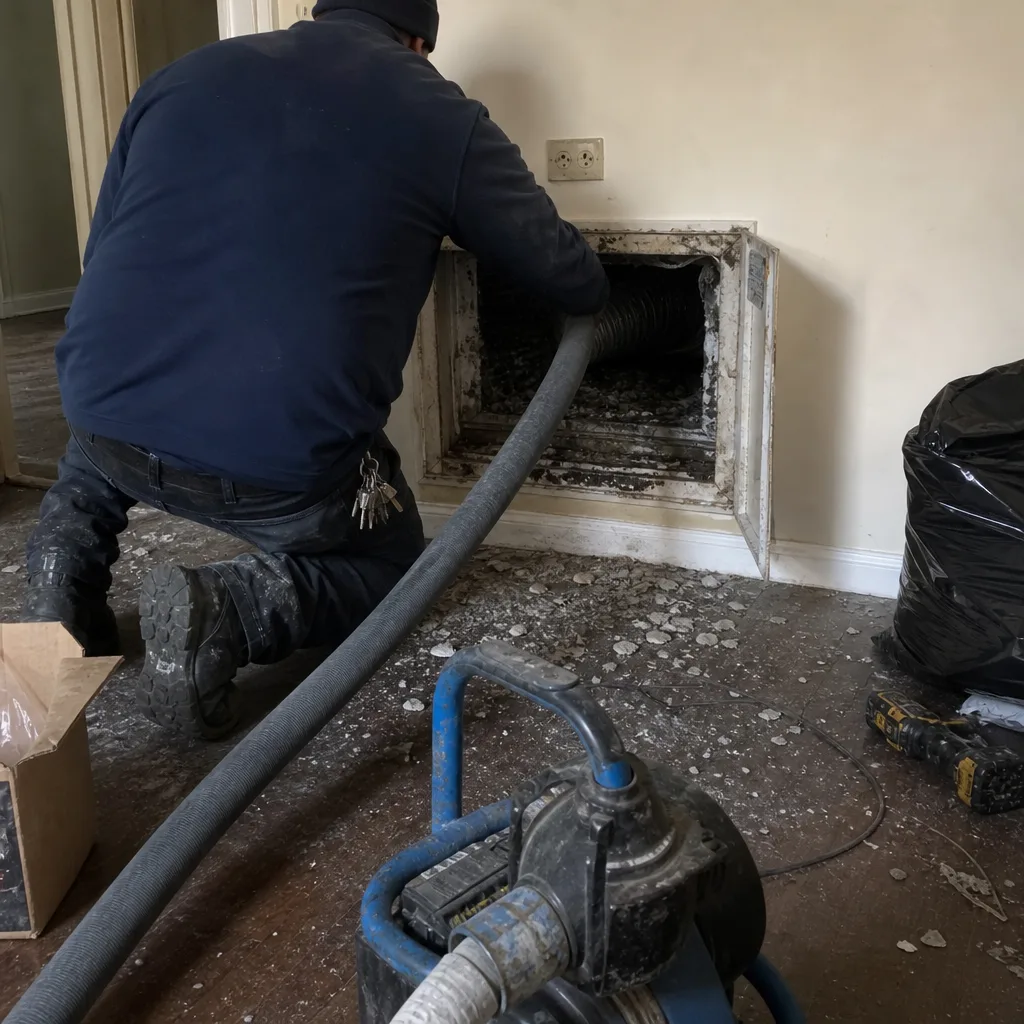 Before
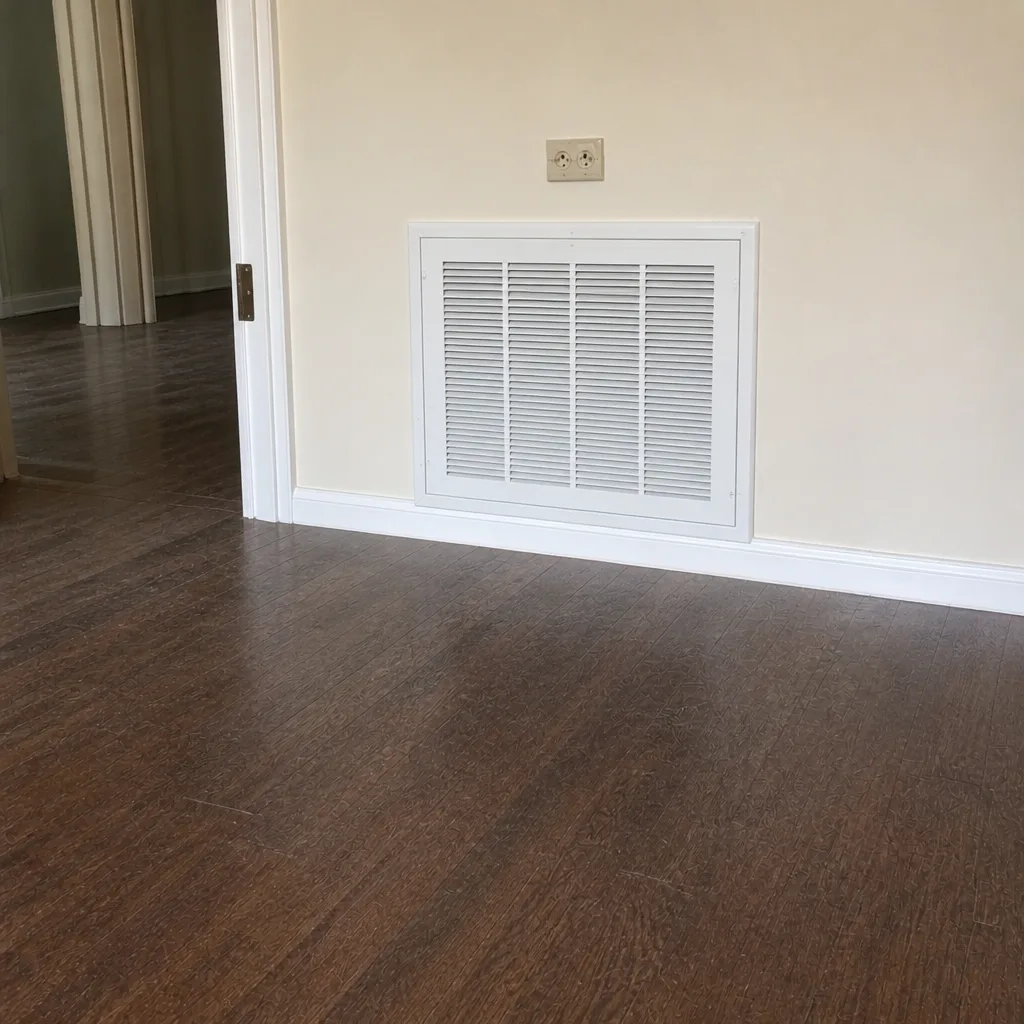 After
When to Call a Professional
Seasonal maintenance covers a lot, but some conditions should pull the process forward. Call a professional if you see visible mold inside the ductwork or around a register, if a musty smell doesn’t go away after a filter change, if the house re-coats with dust within a few days of cleaning, or if allergy symptoms in the house track with time spent indoors. The same goes for any renovation that opened the system, pest activity in the ductwork, or a dryer that has started taking two cycles to dry a load – the vent restriction behind that should be cleared by someone with the right equipment, not left. And if the pre-heating inspection turns up a loose duct joint or a torn flexible run, repairing it before the furnace starts is a small job that gets expensive later. Air Duct Cleaning Tacony offers free estimates in Tacony – call (855) 337-1285 for an exact quote. Estimates are free, and a flat price per system is agreed before work starts.
Frequently Asked Questions
For most homes in Tacony, a full cleaning every two to three years is reasonable, with a fall cleaning tied to the heating season switch as the anchor. Homes with pets, allergies, recent renovations, or original sheet metal ductwork often benefit from cleaning closer to every year or two. The right times to move up the schedule are the seasonal signals in this guide, not a fixed date on the calendar.
Early fall is the highest-value window, because that’s when a full cleaning clears the summer’s moisture and debris before the heating season pushes it into every room. Fall also has more scheduling flexibility than late summer or deep winter. A spring cleaning is a strong second, especially in homes where pollen loading is heavy on the return side.
Yes, and the reason is seasonal. Fall cleaning removes the material that would otherwise get heated and distributed all winter: dust that has compacted over months, microbial activity from summer humidity, and pollen from spring. The house’s air quality improves because the system is starting the heating season clean rather than redistributing the old load through every vent.
Our Rotobrush rotary brush systems dislodge compacted debris from duct walls instead of just pulling loose dust, and our Nikro HEPA-rated vacuums contain the debris rather than letting fine particulate back into the room. We run Abatement Technologies air filtration units on every job to capture contaminants suspended during cleaning – the same remediation-grade containment used in mold and restoration work. A shop-vac cannot do any of that.
Yes, and it’s a fire-safety issue. A dryer that takes two cycles to dry a load usually has a restricted dryer vent – lint and debris that have built up inside the vent line and reduced airflow. That restriction is a known fire risk, and clearing it is the point of a dedicated dryer vent cleaning. It’s worth treating it as a safety check, not a convenience fix.
Not always, but the two belong together when the cleaning checks reveal a problem. Cleaning turns up loose joints, torn flexible jacket runs, or disconnected sections that were quietly leaking. Sealing those before the heating season keeps the clean duct from leaking air back into an attic or crawlspace. We can assess the system during the same visit – the five services are available under one roof so the work stays with one team.
The Bottom Line
In Tacony, timing the cleaning to the season gets better results than cleaning on a fixed calendar. Clean in early fall to clear the summer load before the heater fires up, guard the return side through spring pollen, watch humidity and the coil through the summer, and keep the filter turning over through winter’s heating cycles. The pre-heating inspection in September is the single most useful habit to build – it catches moisture damage before it costs more. Air Duct Cleaning Tacony runs the whole scope, from cleaning to sealing to sanitizing, on every visit. Call (855) 337-1285 for a free estimate. We answer 24/7. Fast dispatch from 7am to 7pm, Sunday through Friday.
Written by the team at Air Duct Cleaning Tacony.